Here you will know “Homemade iron rich foods for babies”
When your baby starts consuming solid foods, Many elements are found in these foods, one of those elements is iron which plays an important role in the baby’s health, like – healthy growth, brain development, and building strong immunity. When a baby is born, there is a lot of iron in its body which starts decreasing around 6 month of age. Therefore, it becomes essential to introduce iron-rich foods in their diet.
Why Homemade iron rich foods for babies
Homemade iron-rich foods are one of the best choices for babies because they are fresh, natural, and free from preservatives or artificial additives. When you prepare food at home, you have complete control over the ingredients, texture, and flavor, making it safer and healthier for your little one’s delicate tummy. Store-bought baby foods often lose nutrients during processing, while homemade meals retain more of the natural vitamins and minerals. Additionally, cooking at home allows you to adjust the recipes based on your baby’s age, taste preferences, and any food sensitivities.
By choosing homemade iron-rich foods, you’re not just feeding your baby—you’re building the foundation for a lifetime of healthy growth and strong immunity.
Why iron is important for babies’ growth and brain development
Iron is one of the most essential minerals for babies as it supports overall body growth and development. It helps in the production of hemoglobin, which carries oxygen to every part of the body, ensuring proper physical growth and energy levels. Iron also plays a key role in strengthening the immune system, making babies more resistant to common infections. Most important, iron is crucial for brain development during the first two years of life, as it supports memory, learning, and concentration. Without enough iron, babies may experience fatigue, delayed milestones, or even long-term developmental issues.
Common signs of iron deficiency in babies
Iron deficiency (anemia) can affect a baby’s growth, energy, and brain development. Some common signs parents should watch for include:
Pale skin or lips
Low energy, tiredness, or sleeping more than usual
Poor appetite or refusal to eat
Slow weight gain or delayed growth
Irritability or fussiness
Frequent infections due to weak immunity
Delayed developmental milestones (like crawling or walking late)
If parents notice these symptoms, it’s important to consult a pediatrician and include more iron-rich foods in the baby’s diet.
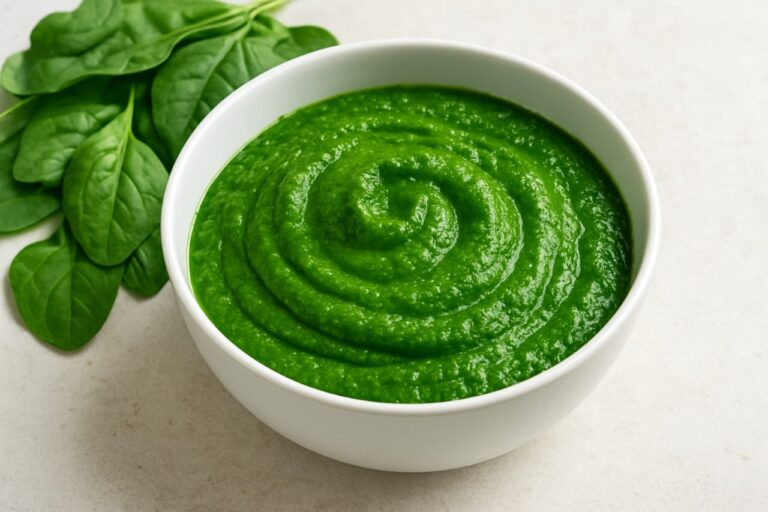
Spinach puree is one of the most nutritious first foods you can introduce to your baby. Spinach is naturally rich in iron, calcium, folate, vitamin A, and vitamin C.
Benefits :
Provides a natural source of iron for hemoglobin and brain development.
Rich in antioxidants that support immunity.
Easy to digest when cooked properly.
Can be combined with other purees to make meals more filling and tasty.
2. Beetroot Mash
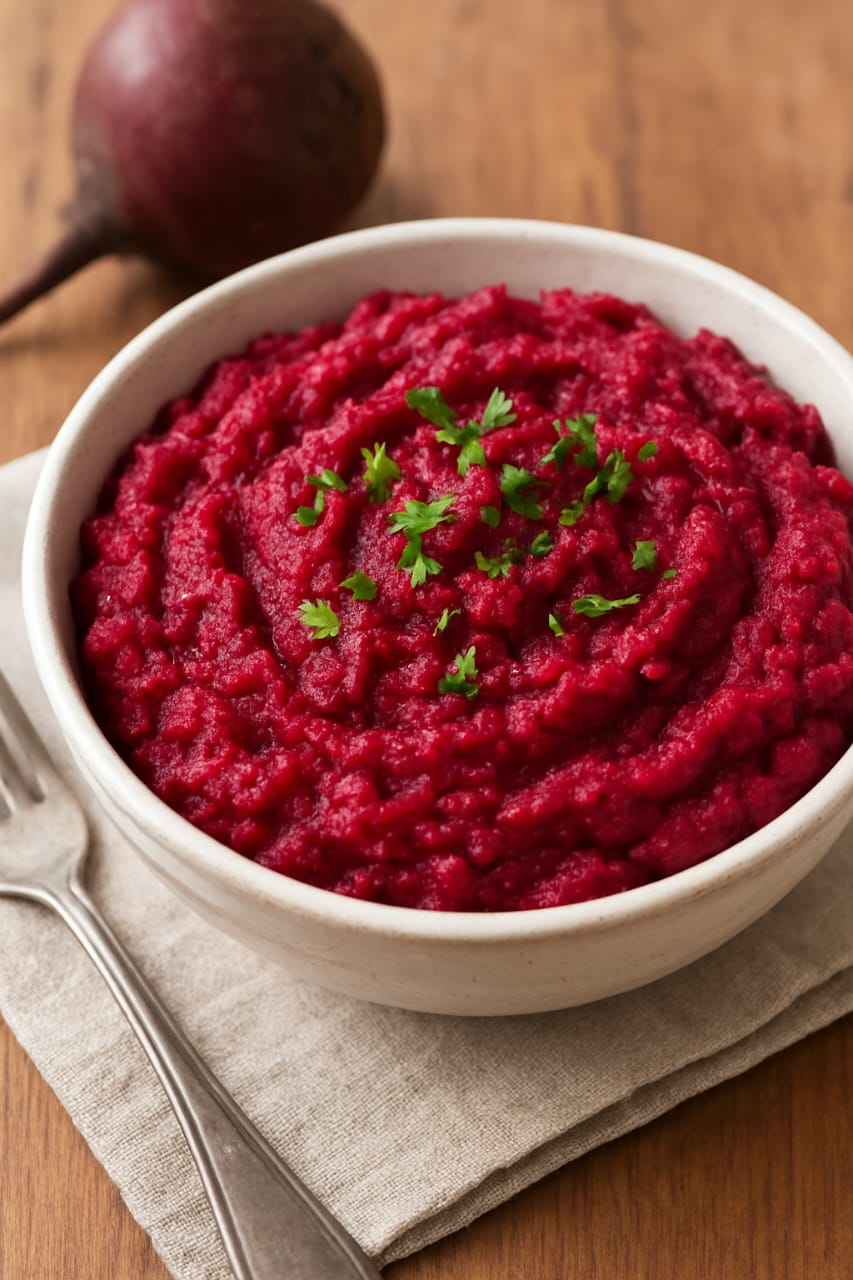
Beetroot mash is a colorful, sweet, and nutrient-dense food that makes a wonderful addition to your baby’s diet. Beets are packed with iron, folate, potassium, fiber, and vitamin C, which support blood formation, digestion, and overall growth.
Benefits :
Rich in iron to prevent anemia and support brain development.
High in fiber, which aids healthy digestion.
Contains vitamin C, which boosts immunity and helps in iron absorption.
Naturally sweet and attractive in color, encouraging babies to enjoy eating.
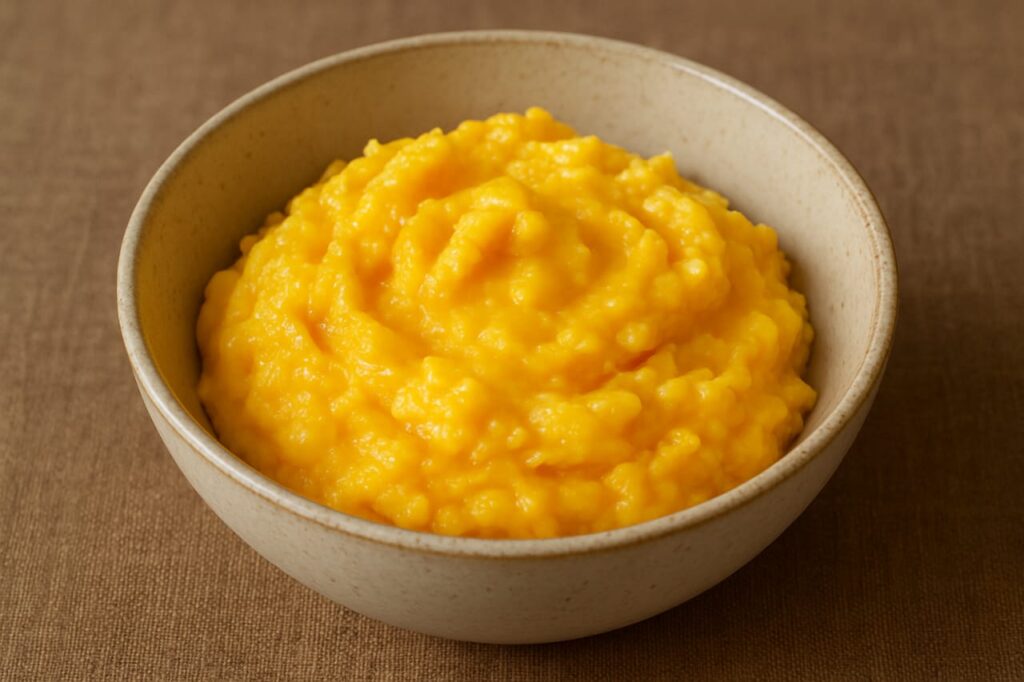
3. Sweet Potato Mash
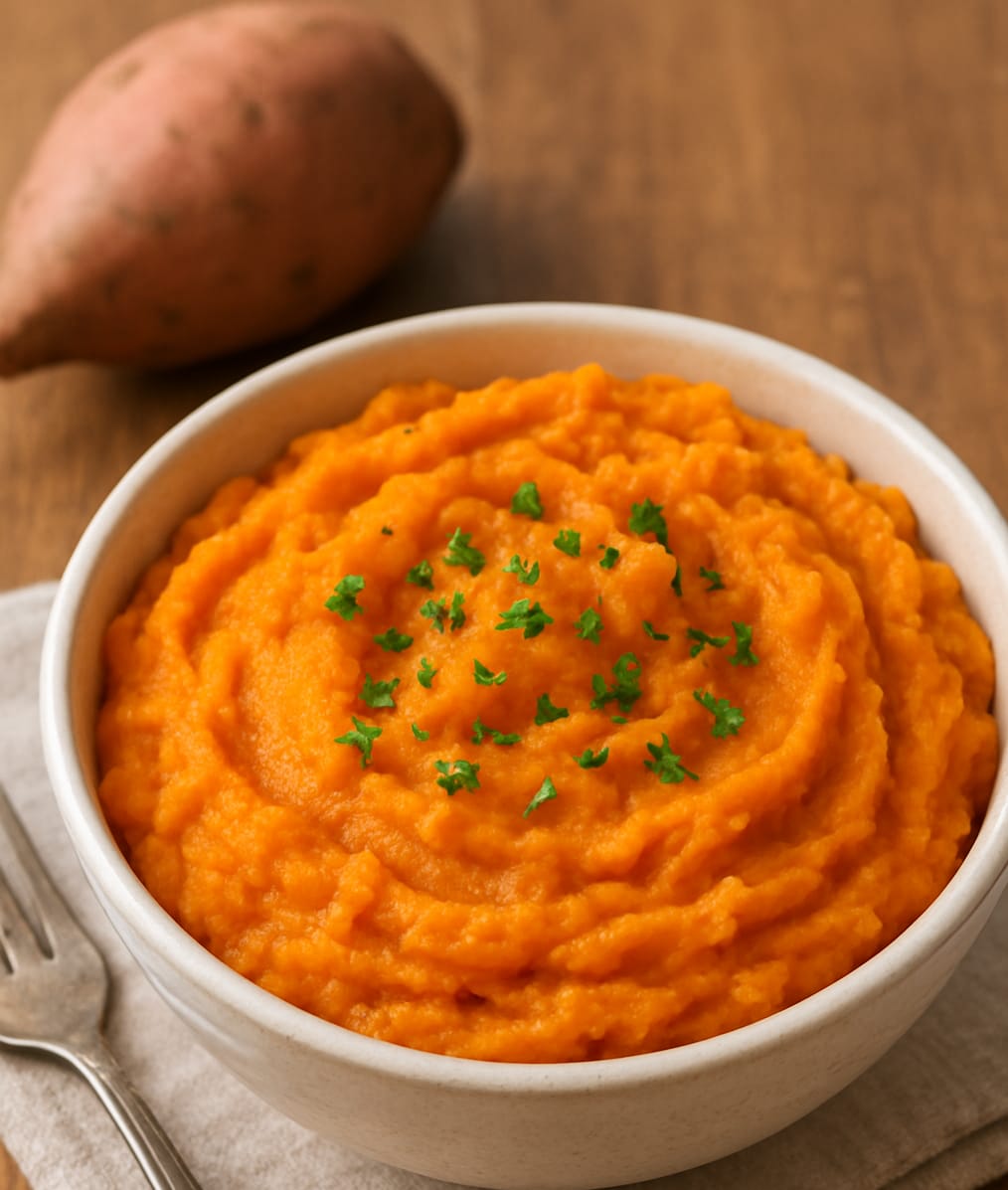
Sweet potatoes are nutritious, starchy root vegetables with a sweet flavor. They are rich in Iron, vitamin A, vitamin C, fiber, and antioxidants.
Benefits :
Supports healthy vision & brain development
Helps in iron absorption
Boosts immunity
Easy to mash and digest
4. Peas
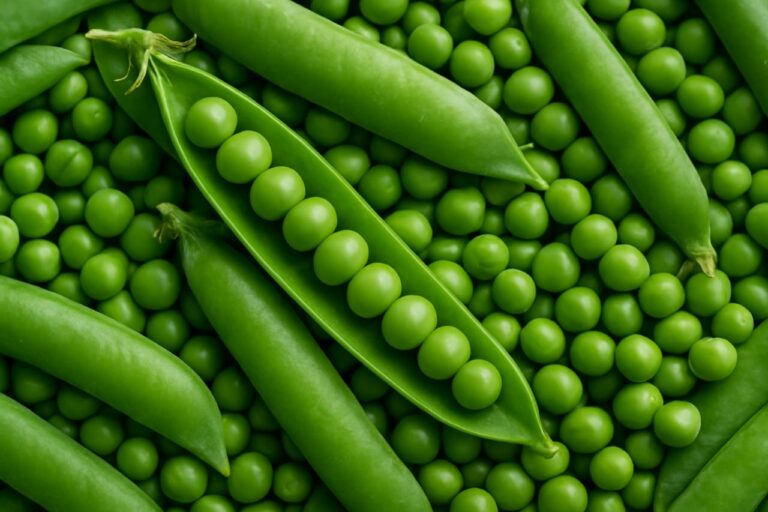
Peas are a wonderful first food for babies, packed with iron, protein, fiber, Vitamin A, Vitamin C, Vitamin K, and B vitamins. They are small but mighty, providing both energy and essential nutrients that support growth and development.
Benefits :
helps in the production of hemoglobin and supports brain development.
supports muscle growth and overall development.
keeps digestion healthy and prevents constipation.
encourages babies to accept green vegetables early.
5. Fenugreek Leaves
Fenugreek leaves, also known as methi, are a traditional green leafy vegetable widely used in Indian households. They are packed with iron, calcium, folate, Vitamin A, Vitamin C, and antioxidants, making them a power food for babies when introduced in small amounts after 8–10 months of age.
Benefits :
Rich source of iron
Supports digestion
folate and Vitamin A support healthy brain growth.
often recommended in Indian diets for overall strength.
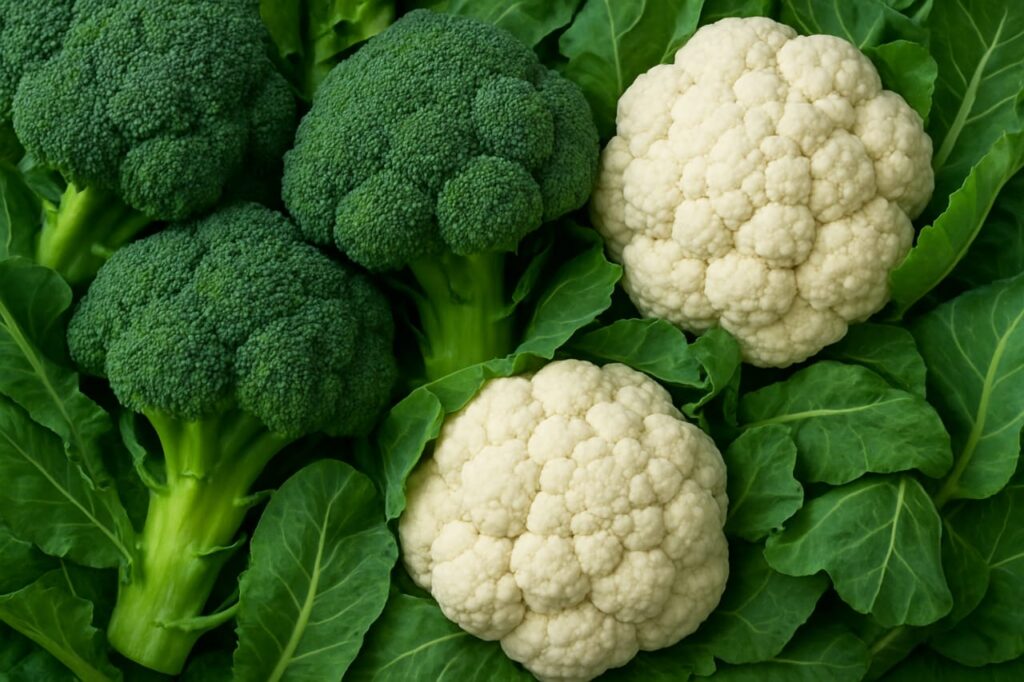
6. Broccoli & Cauliflower
Broccoli and cauliflower are two powerhouse vegetables from the cruciferous family that make excellent choices for baby food. Both are rich in iron, calcium, Vitamin C, Vitamin K, folate, and fiber, which are essential for a baby’s healthy growth and development.
Benefits :
keeps babies full without being heavy on digestion.
supports red blood cell formation and brain development.
strengthens immunity and helps absorb iron better.
protect against cell damage and support overall health.
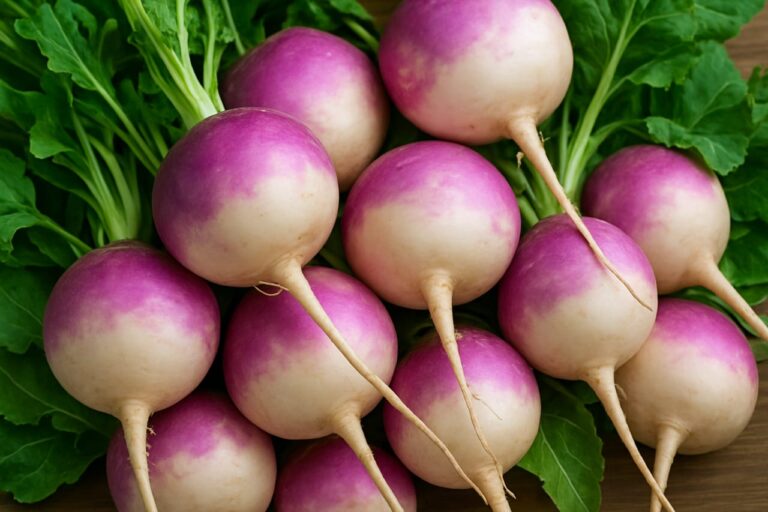
7. Turnip (Shalgam)
Turnip, also known as shalgam, is a root vegetable that can be introduced to babies after 8 months in the form of a smooth puree or mash. It has a mildly sweet and earthy taste when cooked and is loaded with iron, calcium, potassium, Vitamin C, Vitamin K, and fiber. Turnips are also low in calories but rich in essential nutrients, making them a great addition to a baby’s diet.
Benefits :
helps in hemoglobin production and brain development.
Turnips contain calcium, which is crucial for building strong bones and teeth.
high water content helps keep babies hydrated.
fiber content keeps the digestive system healthy and prevents constipation.
Fruits
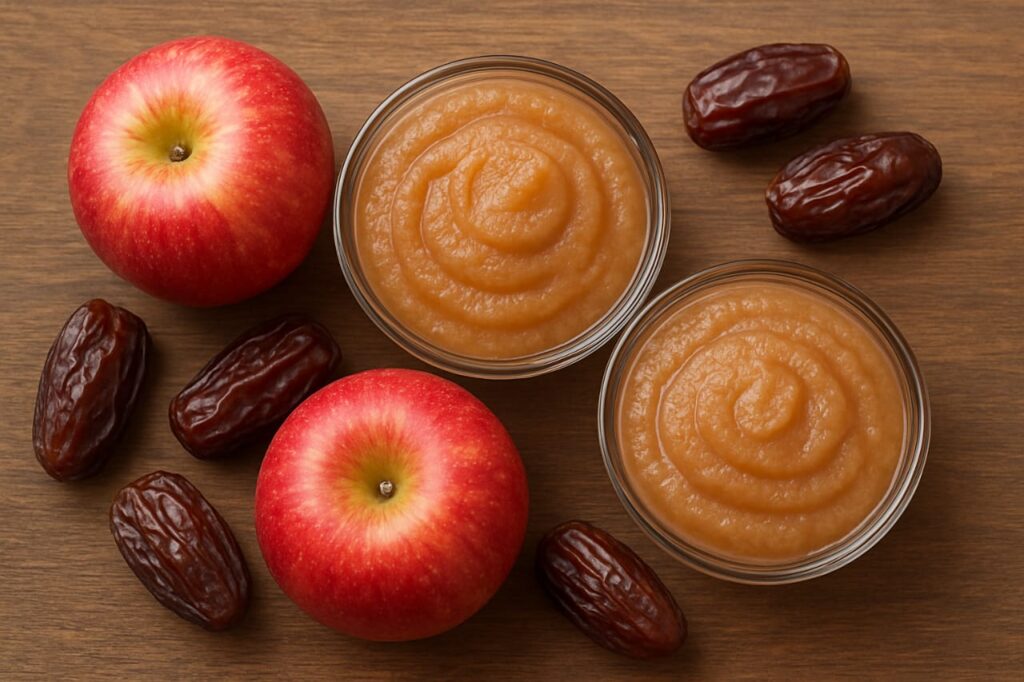
1. Apple & Date Puree
Apple and date puree is a naturally sweet, energy-boosting, and iron-rich food for babies. Apples provide Vitamin C, fiber, and antioxidants, while dates are loaded with iron, calcium, potassium, and natural sugars that give instant energy. Together, they make a nutrient-dense puree that is not only tasty but also very gentle on a baby’s tummy.
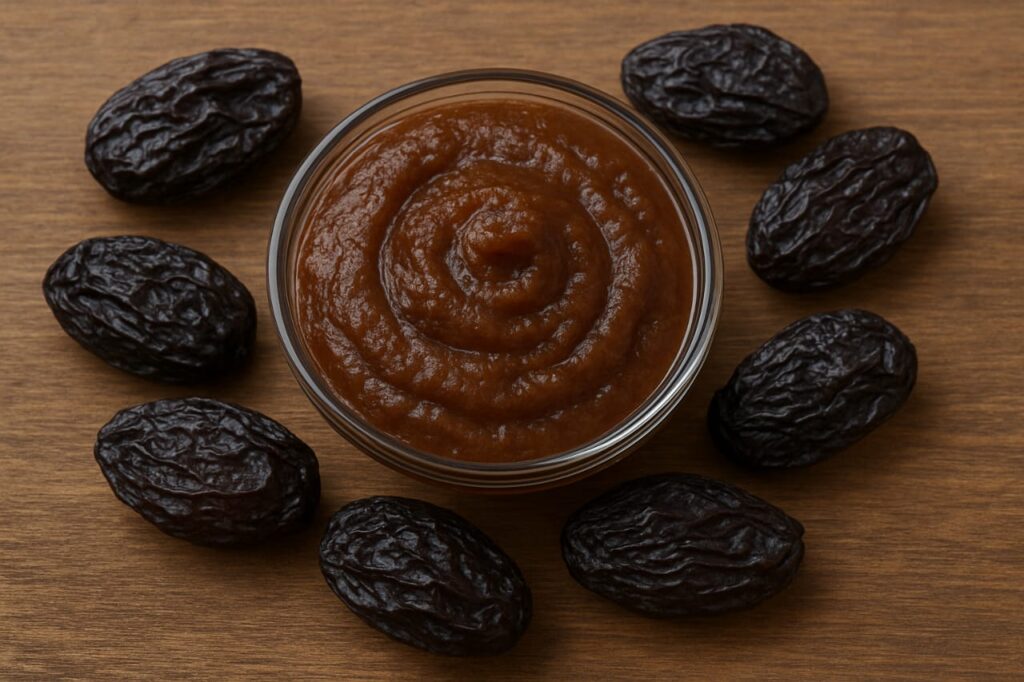
2. Prune puree
Prune puree offers several benefits for babies, primarily in aiding digestion and providing essential nutrients. It’s a natural remedy for constipation due to its high fiber and sorbitol content, which helps soften stools and regulate bowel movements. Their natural sweetness and soft texture after soaking make them a baby-friendly food that can be introduced after 6–8 months.
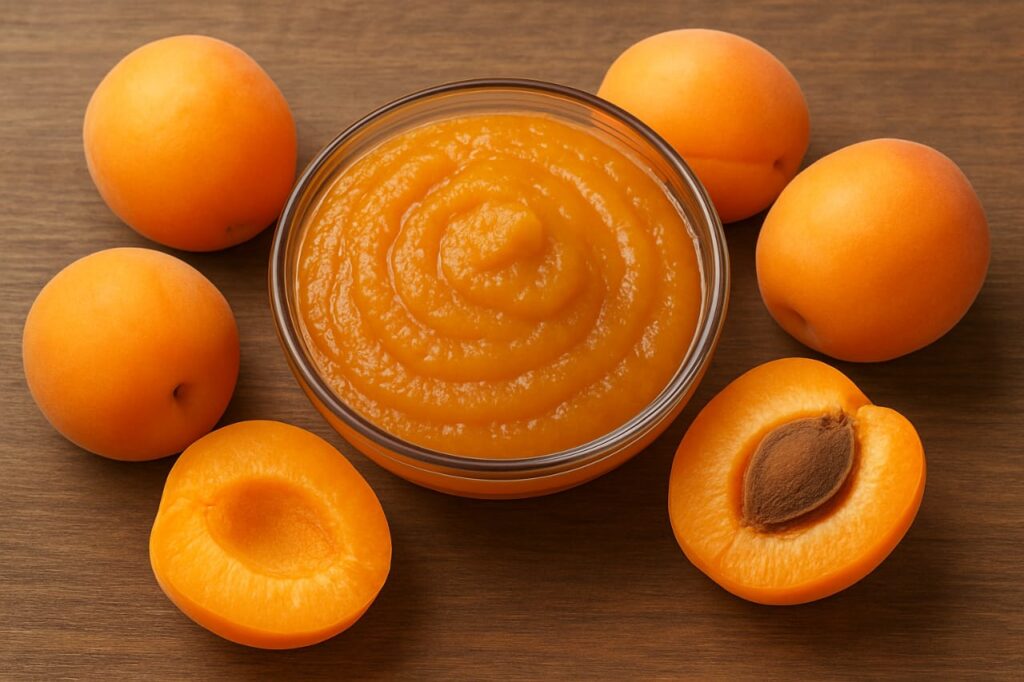
3. Apricot Mash
Apricot mash is a delicious, naturally sweet, and nutrient-packed food for babies. Apricot mash offers several benefits for babies, including being a good source of vitamins A, C, and E, as well as iron and fiber.
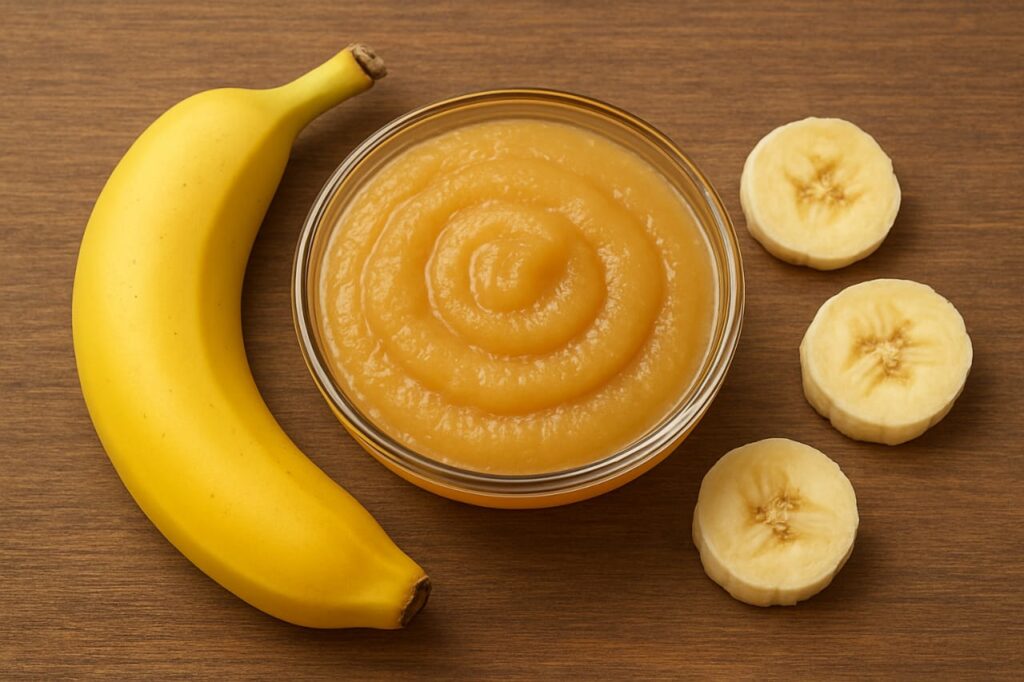
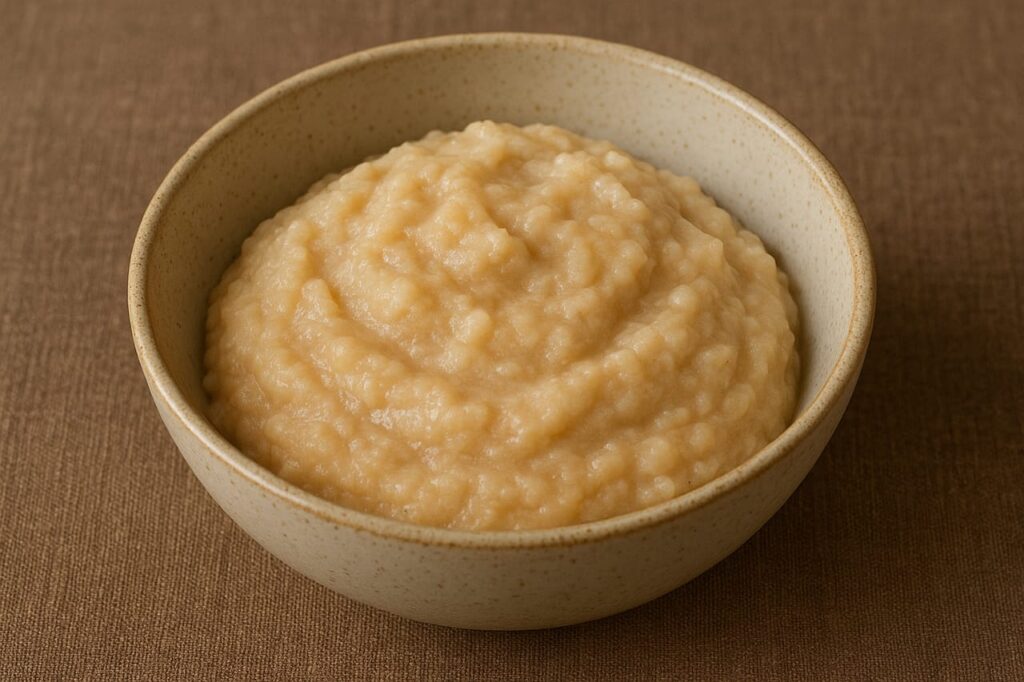
4. Banana
Banana mash is one of the simplest and most popular first foods for babies. Bananas are naturally sweet, soft, and easy to digest, making them perfect for weaning. They are rich in iron, potassium, Vitamin B6, Vitamin C, and dietary fiber, which support a baby’s overall growth and development. Since bananas don’t require cooking, they can be mashed quickly and served fresh anytime.
Grains & pulses
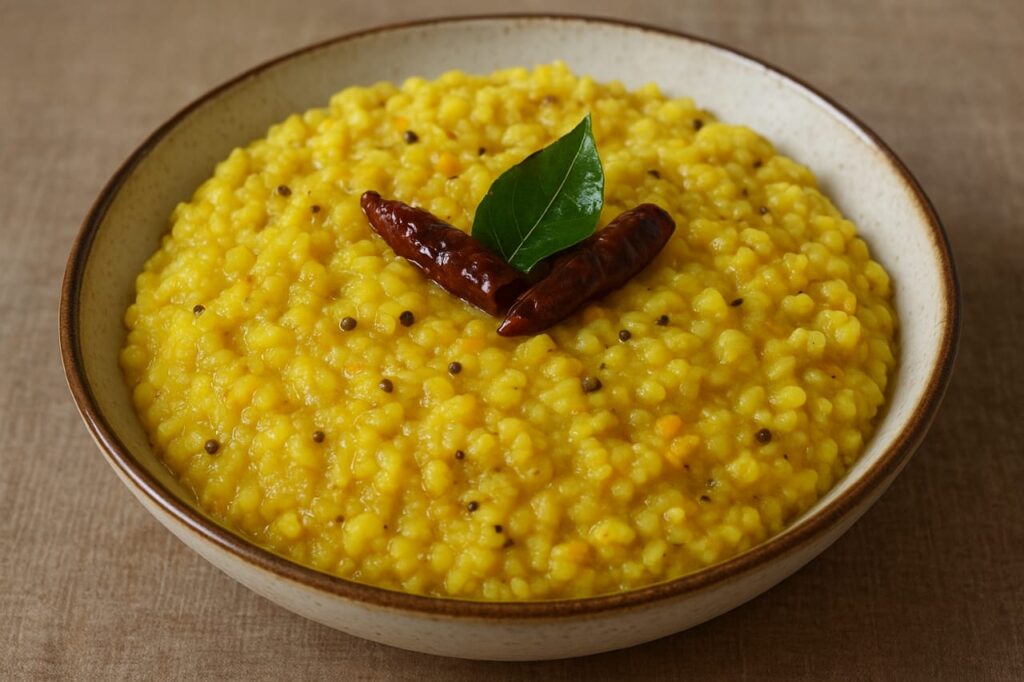
Moong Dal Khichdi
Moong dal khichdi is one of the most traditional and wholesome first solid foods for babies. It is made with yellow moong dal (split lentils) and rice, cooked together until soft and mushy. This dish is light, easy to digest, and packed with essential nutrients like iron, protein, carbohydrates, calcium, and vitamins—making it an ideal weaning food.
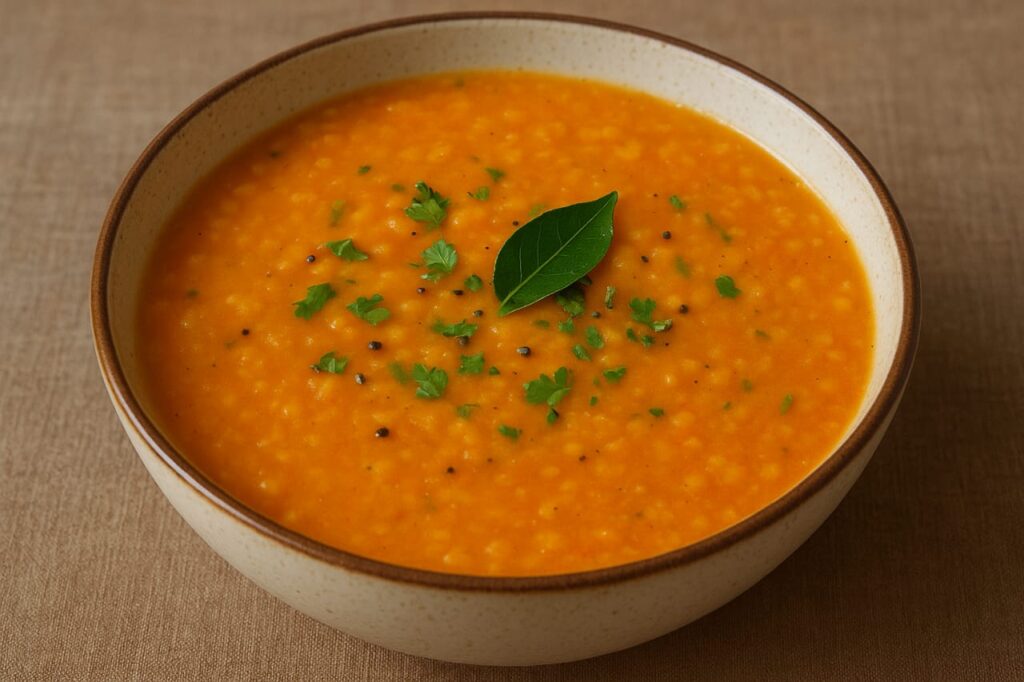
Masoor Dal (Red Lentil) Soup
Masoor dal soup is a light, protein-packed, and highly nutritious food that is perfect for babies starting solids. Red lentils are soft, cook quickly, and are easy to digest, making them a great choice for weaning. They are rich in iron, protein, folate, fiber, and essential vitamins, which support healthy growth and development.
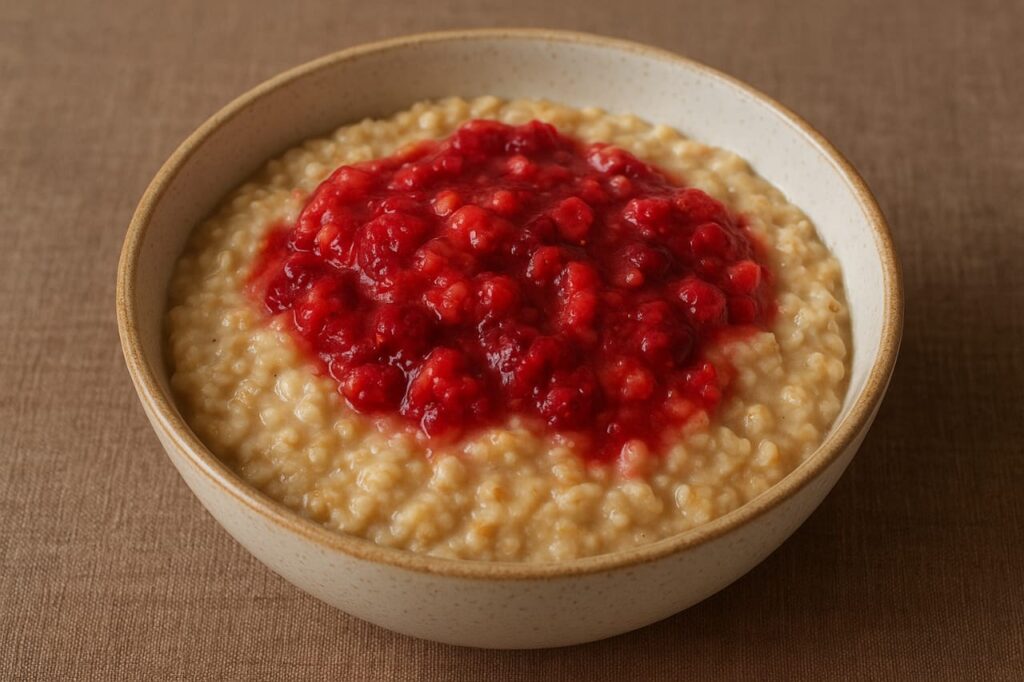
Oats with mashed fruits
Oats with mashed fruits is a wholesome, filling, and nutrient-rich meal for babies. Oats are a great source of iron, fiber, protein, and complex carbohydrates, while fruits add natural sweetness along with vitamins, minerals, and antioxidants. Together, they make a balanced meal that supports growth, boosts immunity, and aids digestion.
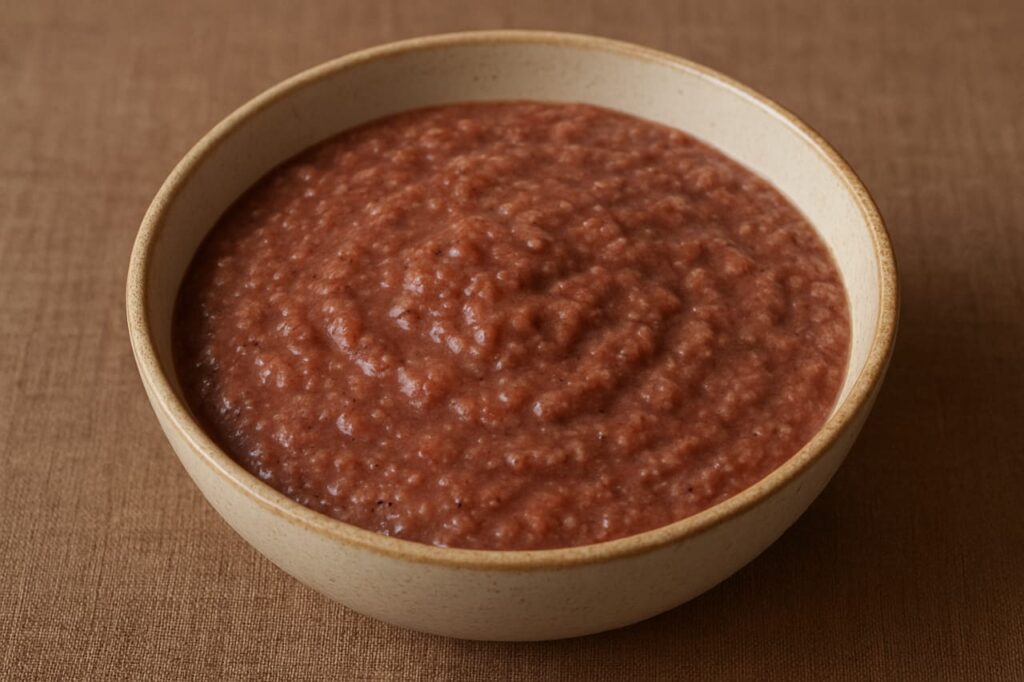
Ragi (Finger Millet) Porridge
Ragi, also known as finger millet, is a traditional superfood for babies and one of the best natural sources of plant-based iron and calcium. Ragi porridge is smooth, filling, and highly nutritious, making it an ideal first food after 6 months. It provides essential nutrients like iron, calcium, fiber, protein, and B vitamins, which are important for overall growth and development.
Animal based (non-vegetarian)
Egg yolk mash
Egg yolk mash is one of the best protein-rich first foods you can introduce to babies after 8 months. The yolk is packed with iron, healthy fats, protein, Vitamin A, Vitamin D, choline, and B vitamins, which are essential for growth, brain development, and immunity. Since the egg white can sometimes trigger allergies in young babies, many parents start with only the yolk first.
Information
⚠️⚠️ Always hard-boil the egg thoroughly and use only the yolk for babies under 1 year. Mash it with a little breast milk, formula, or mashed potato to make it creamy and easier to swallow. Introduce in small quantities first to check for any sensitivity.
Chicken or Fish Puree
Chicken and fish purees are excellent first non-vegetarian foods for babies, usually introduced after 9–10 months. Both are rich in iron, high-quality protein, Vitamin B12, zinc, and healthy fats, which are crucial for growth, immunity, and brain development. These purees are smooth, filling, and easy to digest when prepared properly.
Information
⚠️Always choose boneless chicken or soft, boneless, low-mercury fish like salmon, cod, or tilapia.
⚠️Cook thoroughly (steamed or boiled) before pureeing.
⚠️Introduce in small amounts to check for allergies.
⚠️Avoid adding salt, strong spices, or oil for babies under 1 year.
The last line
“Introducing homemade iron-rich foods into your baby’s diet is a simple yet powerful way to support healthy growth, strong immunity, and proper brain development—laying the foundation for a healthier future.”