




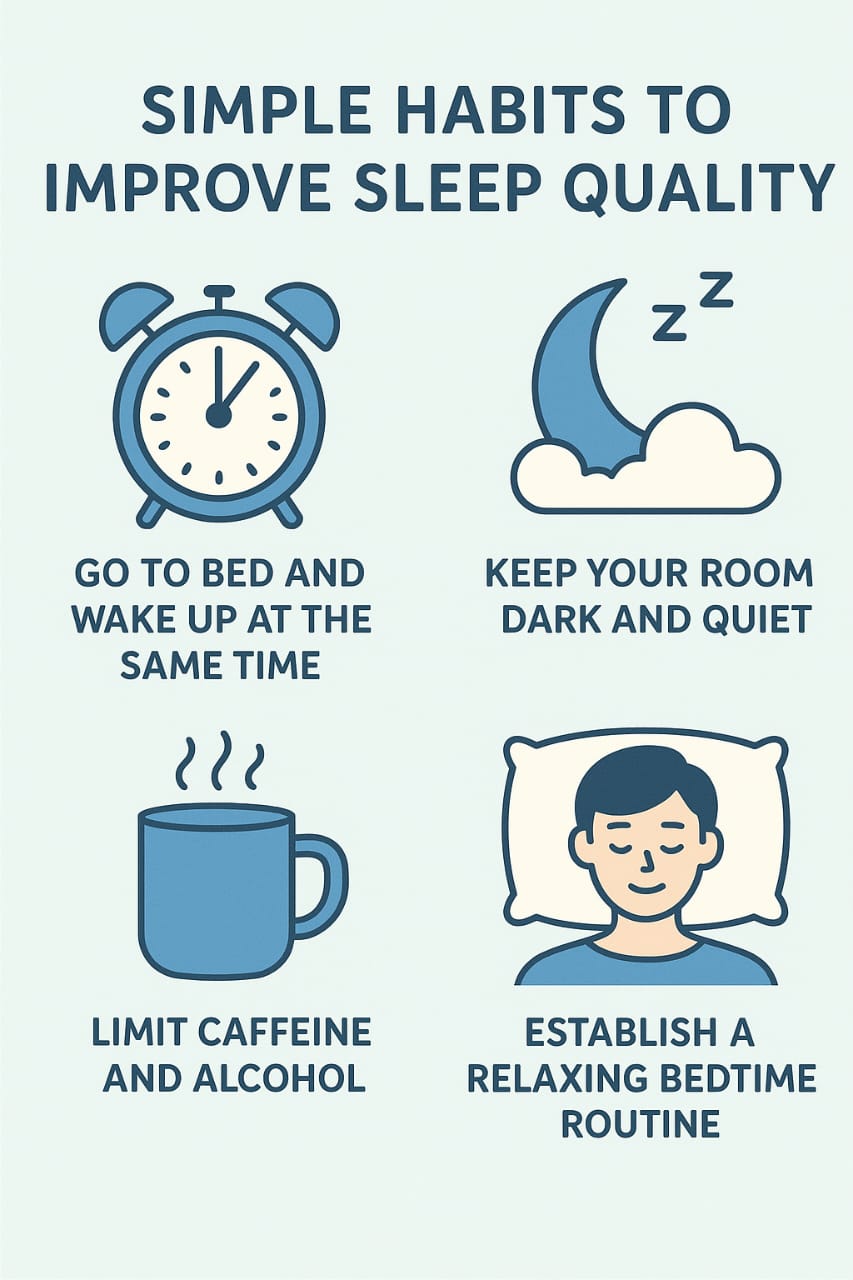
Simple habits too improve sleep quality
Introduction
In this blog we will discuss about “Simple habits to improve sleep quality”
“One of the most neglected facets of our health is sleep. People frequently forgo sleep in today’s hectic lives in favour of work, social interactions, or endless phone scrolling. But getting too little sleep does more than just make you feel exhausted; it also has an impact on your mood, concentration, productivity, and even long-term health.
The good news is that complicated routines or medication aren’t always necessary to improve the quality of your sleep. You can change your nights and wake up feeling rejuvenated and prepared to face the day with a few easy and reliable routines.
This blog will discuss the best, yet easiest, habits you can adopt to naturally enhance the quality of your sleep.
Why Good Sleep Matters for Health
Before we dive into habits, it’s important to understand why sleep is so crucial:
Physical Health: Sleep helps repair muscles, tissues, and cells. It also strengthens your immune system.
Mental Health: Quality sleep reduces stress, anxiety, and the risk of depression.
Memory and Learning: Sleep enhances memory retention and problem-solving skills.
Productivity: A well-rested mind is sharper, more creative, and focused.
Long-Term Benefits: Poor sleep has been linked to diabetes, obesity, heart disease, and weakened immunity.
Clearly, sleep is not a luxury—it’s a necessity.
Common Reasons Behind Poor Sleep
Many people struggle with poor sleep, and the reasons can vary:
Irregular sleep schedule
Excessive caffeine or late-night eating
Stress and overthinking
Long screen exposure (blue light from phones/laptops)
Poor sleep environment (uncomfortable mattress, noise, light, or temperature)
Lack of physical activity
Medical conditions such as sleep apnea or insomnia
Identifying your personal triggers is the first step to solving sleep issues.
Simple habits to improve sleep quality
1. Stick to a Consistent Sleep Schedule
The circadian rhythm is your body’s natural clock. This rhythm can be controlled by going to bed and waking up at the same time every day, including on the weekends. Your body gradually becomes accustomed to feeling drowsy at night and alert in the morning.
2. Create a Relaxing Night Routine
A bedtime routine signals your body that it’s time to wind down. Just like children need bedtime rituals, adults benefit from them too.
Some ideas for a relaxing night routine:
Read a book (preferably paper, not digital).
Take a warm shower.
Listen to calm music.
Do some light stretching or deep breathing.
3. Limit Screen Time Before Bed
Blue light from screens suppresses melatonin, the hormone that causes drowsiness. Your brain believes it is still daytime if you are watching television or browsing social media right before bed.
Solution: Try to avoid screens at least 1 hour before bed. If unavoidable, use blue-light filters or “night mode.”
4. Keep Your Bedroom Sleep-Friendly
Your bedroom should be a sanctuary for rest. Pay attention to these factors:
Temperature: Keep it slightly cool (around 18–22°C is ideal).
Darkness: Use blackout curtains or a sleep mask.
Noise: Keep it quiet. White noise machines can help if you live in a noisy area.
Comfort: Invest in a good mattress and pillows.
5. Watch What You Eat and Drink
Your diet impacts your sleep more than you think.
Avoid caffeine (coffee, tea, energy drinks) at least 6 hours before bedtime.
Limit alcohol, which may make you sleepy initially but disrupts deep sleep later.
Eat light dinners. Heavy or spicy meals can cause indigestion and discomfort.
Better choices: Herbal teas (like chamomile or lavender), warm milk, or light snacks if you’re hungry before bed.
6. Stay Physically Active (But Not Too Late)
By lowering stress and enhancing bodily rhythms, exercise helps people sleep better. On the other hand, exercising too soon before bed can make you alert rather than drowsy.
Advice: Try to work out for at least half an hour every day, but complete strenuous exercises at least three to four hours before bed.
7. Practice Stress-Relief and Mindfulness
Stress and anxiety are common sleep disruptors. Try these practices:
Meditation or mindfulness before bed
Journaling your thoughts to “empty the mind”
Deep breathing exercises (inhale for 4 seconds, hold for 7, exhale for 8)
Even 5–10 minutes of relaxation can help calm your nervous system and prepare your mind for rest.
8. Limit Daytime Naps
While naps can recharge you, long or late naps may interfere with night time sleep.
Best practice: Keep naps under 20–30 minutes, and take them before 3 p.m.
9. Get Sunlight Exposure During the Day
By increasing serotonin, which is subsequently transformed into melatonin at night, daylight sunlight helps control your sleep-wake cycle.
Advice: Make an effort to be outside for at least 20 to 30 minutes each day, particularly in the morning.
10. Use Your Bed Only for Sleep and Rest
Your brain begins to associate the bed with activity rather than sleep if you frequently work, study, or watch TV in bed. Your bed should only be used for intimacy and sleep. This teaches your brain to go into “rest mode” when you’re lying down.
Bonus Tips for Better Sleep
If you have trouble falling asleep, don’t keep checking the time because it makes you more anxious.
Try using essential oils of sandalwood or lavender for aromatherapy.
Adapt your sleep schedule to the amount of natural light.
Get up and do something soothing until you feel drowsy again if you wake up in the middle of the night and are unable to fall back asleep.
Conclusion
Simple, regular habits are all you need to improve the quality of your sleep. You can restore your body’s natural rhythm and experience deeper, more restful sleep by following a schedule, making your sleeping environment peaceful, avoiding screens, eating mindfully, and managing stress.
Keep in mind that sleep is not a waste of time. It’s an investment in your happiness, productivity, and well-being. You’ll see the difference in a matter of weeks if you start with just one or two habits today.
FAQ
Q1. How many hours of sleep do adults need?
Most adults need 7–9 hours of quality sleep per night.
Q2. Is it okay to sleep late and wake up late if I get enough hours?
While hours matter, the timing also affects your circadian rhythm. Sleeping late regularly may still disrupt health.
Q3. Can herbal teas really help with sleep?
Yes, caffeine-free teas like chamomile, lavender, or peppermint can promote relaxation.
Q4. What should I do if I can’t fall asleep even after trying these habits?
If sleep problems persist for weeks, consult a doctor to rule out conditions like insomnia or sleep apnea.
Q5. Do sleep apps or trackers really work?
They can help you understand patterns, but focus more on building healthy habits than relying solely on gadgets.