




Introduction
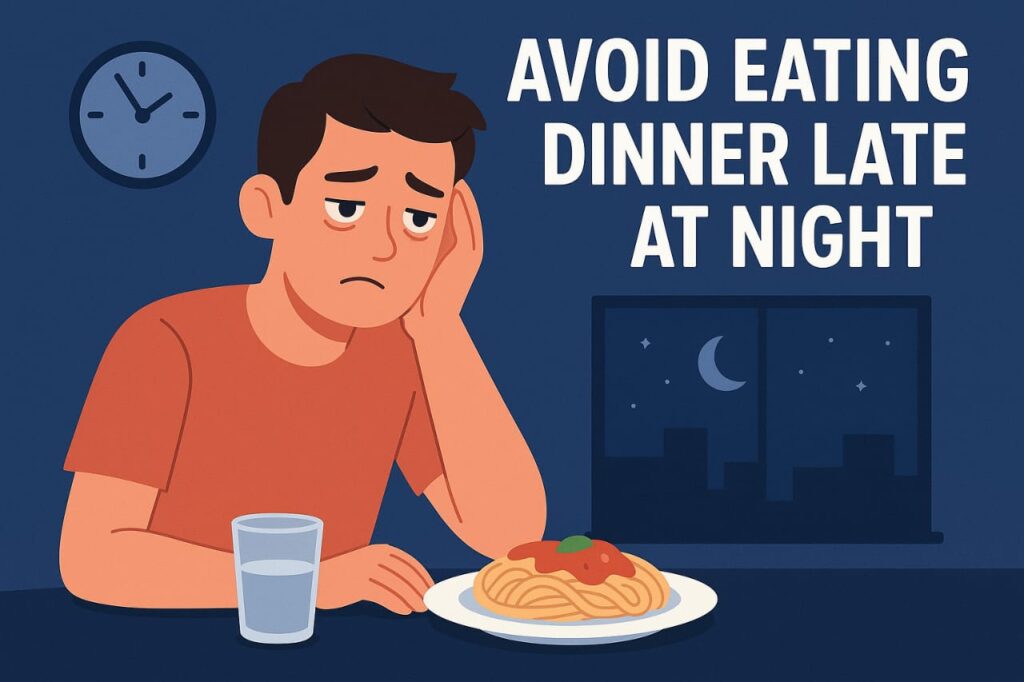
Why You Should Avoid Eating dinner Late at Night
Here you will know “Why You Should Avoid Eating dinner Late at Night “
Eating well, and eating on time, plays a very important role in your health, Many people have the habit of eating late at night due to busy schedules, late work hours, or irregular routines, but this small lifestyle choice can have big effects on the body. When you eat food late at night, before going to sleep, it slows down your digestion, due to which your sleep is disturbed and there is also a chance of increasing your body fat. Studies suggest that finishing dinner a few hours before sleeping helps the body rest, improves metabolism, and reduces health risks.
Making a simple shift in your dinner timing can bring long-term benefits for both your digestion and overall well-being.
What Happens When You Eat Dinner Late at Night?
Eating dinner too close to bedtime can disrupt the natural processes of your body. Here are the common effects:
Slower Digestion – When you lie down soon after eating, the digestive system struggles to break down food properly. This can cause bloating, indigestion, or discomfort.
Poor Sleep Quality – A heavy meal before bed makes the body work overtime, which affects the sleep cycle. You may feel restless or wake up tired instead of refreshed.
Increased Fat Storage – At night, the body’s metabolism slows down. Extra calories consumed late are more likely to be stored as fat, which contributes to weight gain.
Risk of Acid Reflux – Eating late, especially spicy or oily food, can cause acid reflux or heartburn since lying down makes stomach acid flow back up more easily.
Health Risks of Late-Night Dinner
Eating dinner late at night may feel convenient, but over time it can harm your health in several ways.
- Weight Gain and Obesity
Due to having dinner late at night, your digestion slows down, due to which your metabolism weakens and fat starts getting stored in your body.
- Acid Reflux and Heartburn
Going to bed right after dinner allows stomach acid to travel back into the esophagus, causing discomfort, burning sensation, and disturbed sleep.
- Disrupted Metabolism
The body’s internal clock (circadian rhythm) controls digestion and energy use. Eating late can confuse this rhythm, leading to poor nutrient absorption and sluggish metabolism.
- Risk of Diabetes and Heart Problems
Studies suggest that irregular and late-night eating patterns can affect insulin sensitivity, increasing the risk of type 2 diabetes, high blood pressure, and other cardiovascular issues.
Best Time to Eat Dinner for Good Health
The right time to have dinner, depends on what you eat. Experts suggest that the ideal time to have dinner is 2–3 hours before going to bed. This gives your body enough time to digest food properly and prevents discomfort during sleep.
If your bed time is 10:00 or 11:00 pm, then you can have your dinner between 7:30 and 8:30 pm.
By making dinner earlier a consistent habit, you allow your digestive system to rest overnight, which benefits your overall health.
Healthy Alternatives if You Feel Hungry at Night
Sometimes late-night hunger strikes, even if you had an early dinner. Instead of grabbing heavy or oily foods, choose light and healthy options that won’t disturb your sleep or digestion.
Warm Milk – A glass of warm milk helps relax the body and promotes better sleep.
Herbal Tea – Chamomile or peppermint tea soothes the stomach and reduces cravings.
Nuts – Almonds or walnuts provide healthy fats and keep you full without adding excess calories.
Fresh Fruit – Banana, apple, or papaya are light, easy to digest, and satisfy hunger naturally.
Yogurt – A small bowl of plain yogurt calms acidity and supports gut health.
These alternatives are nutritious, easy to digest, and prevent the negative effects of heavy late-night meals.
Tips to Avoid Late-Night Eating
Breaking the habit of eating late at night can improve your digestion, sleep, and overall health. Here are some practical tips:
- Maintain a Fixed Dinner Schedule
- Eat a Balanced Evening Meal
- Stay Hydrated
- Avoid Caffeine and Heavy Spicy Foods at Night
- Keep Healthy Snacks Ready
- Brush Your Teeth After Dinner
Conclusion
Eating dinner late at night may seem harmless, but it can have serious effects on your digestion, sleep, and overall health over time. By finishing your meals 2–3 hours before bedtime, choosing lighter evening foods, and adopting healthy alternatives for late-night hunger, you can improve metabolism, prevent weight gain, and enjoy better sleep quality. Small changes in your dinner timing can make a big difference in your long-term health. Start today, and let your body reap the benefits of a well-timed and balanced evening meal.
FAQ
1. Is it okay to eat late at night occasionally?
Yes, occasional late dinners are usually harmless, but making it a regular habit can affect digestion, sleep, and weight management.
2. Can eating late at night cause weight gain?
Yes. Eating close to bedtime slows metabolism, and excess calories are more likely to be stored as fat, contributing to weight gain.
3. What is the ideal time to eat dinner?
Experts recommend finishing dinner 2–3 hours before bedtime. For example, if you sleep at 10:30 PM, dinner should be done by 7:30–8:00 PM.
4. What should I eat if I feel hungry late at night?
Opt for light, healthy snacks like warm milk, herbal tea, nuts, yogurt, or fresh fruits. Avoid heavy, oily, or spicy foods.
5. Does eating late affect sleep quality?
Yes. Late dinners, especially heavy meals, can disturb sleep by causing discomfort, acid reflux, or restlessness.
6. Can eating early improve metabolism?
Yes. Eating earlier aligns with your body’s natural circadian rhythm, improves digestion, and supports better metabolic health.
Pingback: 15+ Healthy Breakfast Ideas for a Perfect Morning - busy people